A customer calls because a tank is almost empty. A planner rearranges deliveries at the last minute. A driver is sent out urgently, even though the route is inefficient. The immediate problem is solved, but the cost of the decision is already visible: more kilometres, lower truck utilisation and less time for the team to focus on what really matters.
For many industrial companies, situations like this are not exceptional. They are part of daily operations. The issue is rarely a lack of effort or expertise. It is that decisions are still too often made with local visibility, fragmented information and limited time.
This is where IIoT changes the conversation.
The Moment Visibility Becomes Value
For more than 25 years, Sensile Technologies has supported customers in the remote monitoring of tanks for gas, fuels, lubricants and chemicals. In practice, the first objective is often very concrete: know what is happening in the field without waiting for a manual reading, an emergency call or a stockout.
This first layer of visibility already creates measurable value. Better stock information helps companies improve forecasting, plan deliveries more efficiently and reduce unnecessary trips. In one customer study, the implementation of telemetry and its integration into supply chain processes led to a 25% reduction in the number of deliveries. In other projects, customers have achieved logistics cost reductions of up to 30% through improved replenishment planning and higher delivered volumes per route.
These results matter because they show that IIoT is not an abstract digital transformation concept. It affects daily decisions: which customer to serve first, when to schedule a delivery, where to allocate resources and how to avoid avoidable costs. But they also raise a larger question: if visibility over stock levels can generate this much value, what becomes possible when the same logic is extended beyond tanks and logistics to the wider industrial operation?
WIKA Sets the Bigger IIoT Context
Since joining the WIKA Group in 2020, Sensile Technologies has become part of a broader industrial ecosystem with the scale, experience and application knowledge needed to bring digital solutions into real operating environments. WIKA’s long-standing presence across process industries gives it a deep understanding of the conditions customers face every day: complex assets, safety requirements, cost pressure and the need for reliable, actionable information.
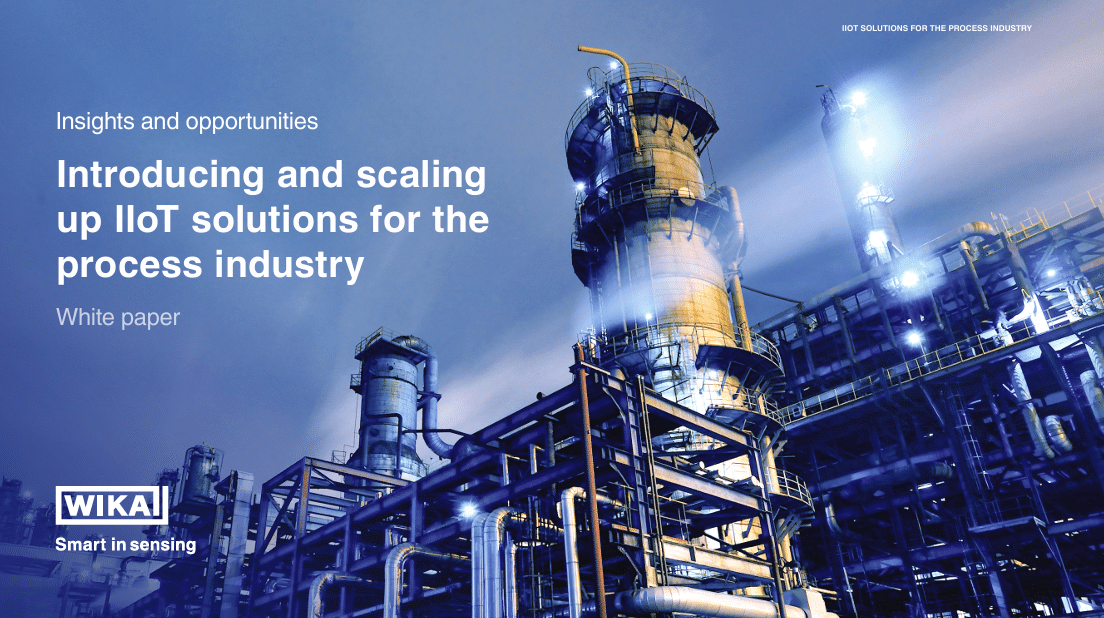
That perspective is reflected in WIKA’s white paper, Introducing and Scaling up IIoT Solutions for the Process Industry. Rather than presenting IIoT as a standalone technology trend, the paper frames it as a practical way for industrial companies to improve efficiency, resilience and sustainability by turning connected data into better operational decisions.
For Sensile Technologies, this broader perspective reinforces what we observe in downstream operations. Visibility is often the starting point, but it is not the destination. The value comes when information supports planning, coordination and action across the business. In other words, IIoT does not simply connect equipment. It connects decisions.
Where IIoT Becomes Long-Term Value
The future of IIoT will not be defined by the number of connected devices alone. It will be defined by how well companies connect the different decisions that shape their operations: production, storage, distribution, service and customer satisfaction.
For customers, this is the real promise of the Sensile-WIKA collaboration: helping them move from isolated visibility to a more complete operational view, from one local improvement to wider optimisation, and from a first IIoT project to sustainable value creation across the lifecycle of their operations.
This is where IIoT becomes more than a project: it becomes a practical way to make operations more connected, resilient and ready for what comes next.